 Lion on the Line
I'm Sona Orbit, the solo developer of Lion on the Line. The first five sections are general ideas you can try without an app. Section six describes the app I made, based on the information on this site as of November 2026. This article is not medical or mental health advice. If you're concerned about your child, talk to a pediatrician or another professional.
1. Ask for help instead of giving an order
“Pick up your toys” is an instruction. Your child hears that they have to do something. “The blocks need to go home. Can you help me put them in the box?” is a request. Your child hears that someone needs their help.
The task is the same, but the second version gives your child a role: the helper. Many kids respond better to being asked for help than to being told what to do.
2. Break it into steps they can see
“Clean your room” is a big task with no clear finish line for a child. Try “Put away 5 blocks first” or “Brush your top teeth.” Each step is something they can see and count.
Count each step as they do it. You don't need many. 3 to 5 is usually enough. When they're done, let the task be done. Don't add more at the last minute.
3. Let someone else ask
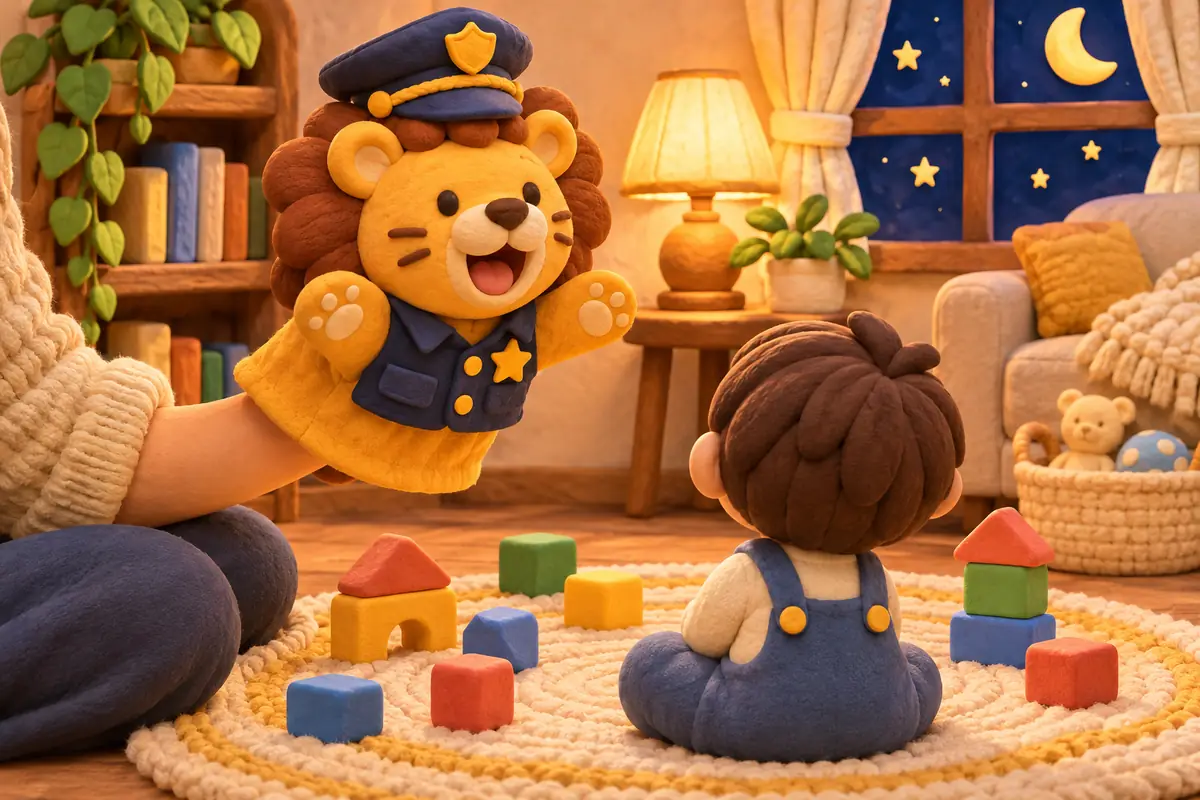
After hearing the same thing from a parent ten times, a child may tune it out. A different voice can help: a stuffed animal, another adult at home, or a character they like.
What matters is that someone else is asking, not scolding. A stuffed animal saying, “My house is full of blocks. Can you help me?” may get a better response than an adult saying “Pick up your toys” for the eleventh time.
4. Respond to every step
When your child finishes a step, respond right away with something they can see or hear: “Hey, the first block is home!” That feels more immediate than waiting until everything is done to say “Good job.”
Respond to what they did. You don't need a gift. You can clap, cheer, or draw a circle on a piece of paper.
5. Skip threats and deals
“No cartoons unless you clean up” or “I'll give you candy when you're done” may work in the short term. But a child can learn to treat every task as a trade. Next time, they may ask, “What do I get?”
Instead, give the task a good ending: someone thanks your child, and it's done. If they really don't want to do it today, you can let them say “In a minute” and try again later rather than turning it into a standoff.
6. Let a Lion on the Line character call
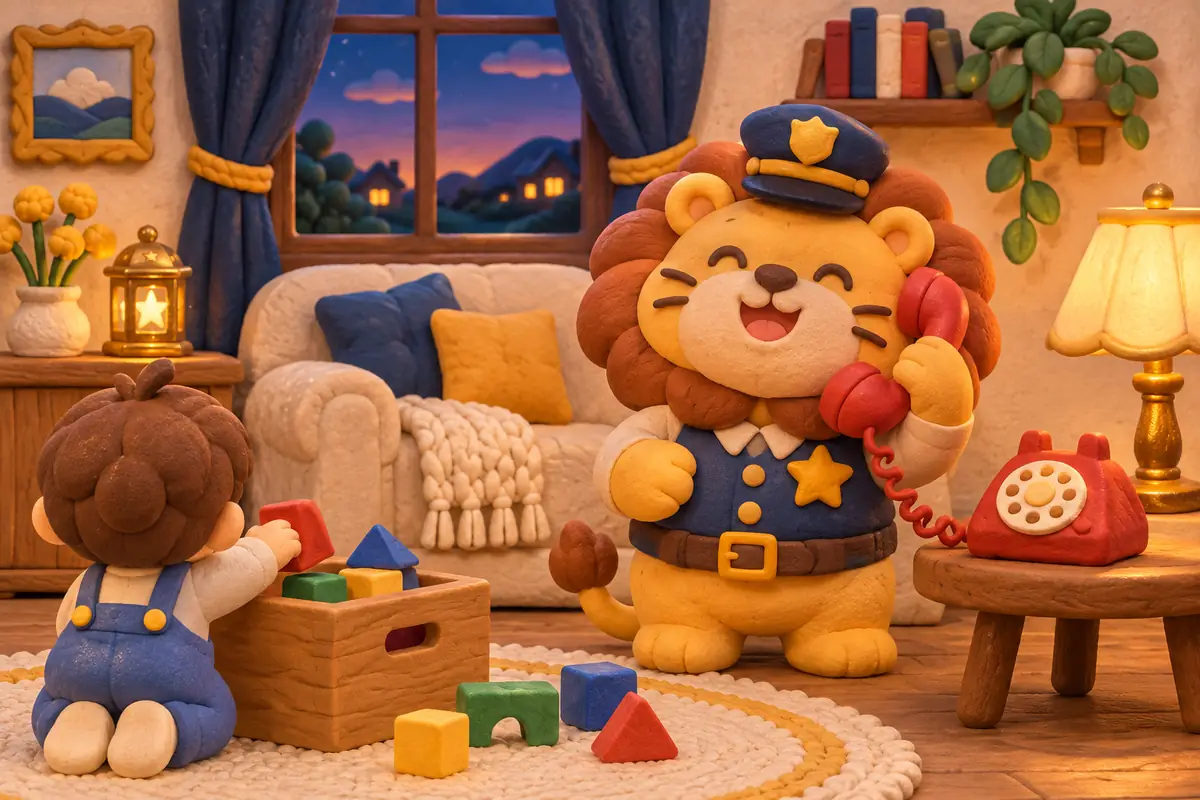
I built the ideas in sections 1 through 5 into Lion on the Line (有獅找你). A parent picks a character from the animal village and a task. Then the character “calls” the child to ask for help.
- At the setup desk, pick a character and a task, such as Sheriff Leo and “Tidy up toys.” Set how many times your child will do it (1 to 5) and when the phone will ring.
- When it rings, your child taps “Answer.” The character explains what they need help with.
- Each time your child does the task, you tap once. The character cheers on the phone, and an item for that task appears on screen. For picking up toys, it's a block. When all the items are there, the character says thanks and hangs up.
- The ten characters cover everyday tasks: eating, picking up toys, getting ready to go out, organizing a school bag, taking a bath, washing hands, getting ready for bed, calming down, doing homework, brushing teeth, and getting dressed. Sheriff Leo and both of his scripts work right away. The other nine characters (two scripts each) and the holiday visitors are a one-time in-app purchase. There's no subscription.
- You can use one phone, or have another iPhone or iPad on the same Wi-Fi ring instead.
The lines are written in advance. They don't scare or threaten your child, or promise rewards. If your child taps “Later,” the call ends without the character scolding them.

It isn't a real call. You and your child can't hear each other through it. The app doesn't use a microphone or camera, and you don't need an account. It requires iOS 17 or later. Lion on the Line is available on the App Store. You can find more details on the website.
7. Frequently asked questions
What if my child always says “Later”?
Accept “Later” and agree on a specific time to try again, such as “After this episode.” Insisting that they do it right away every time can turn it into a standoff.
How many times should my child do the task?
3 to 5 is usually enough. If you set too many, the finish line can feel out of reach, and your child may give up partway through.
Will a Lion on the Line character say my child's name?
No. The lines and audio are prepared in advance. The characters call the child “little one.”
Does Lion on the Line need internet access?
The first time you use it, you need to download a character's voice pack (about 20 MB). After that, calls don't need internet access. If you haven't downloaded a voice pack, the app uses your device's built-in voice.