 Lion on the Line
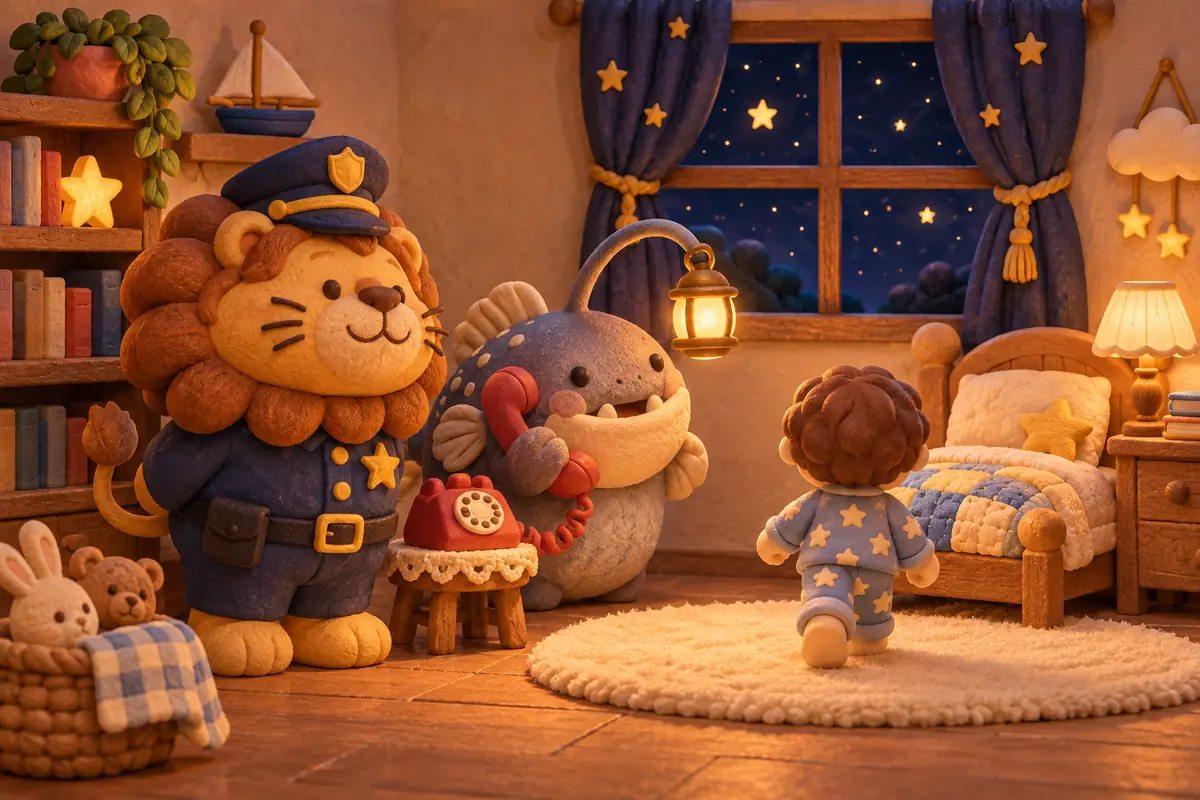
I'm Sona Orbit, the solo developer of Lion on the Line. The advice in sections 1 to 6 follows two articles from the AAP's parent site, HealthyChildren.org (sleep hours and habits, Brush, Book, Bed), checked on November 25, 2026. Section 7 is about the app I made. This is not medical advice. If your child's sleep worries you, talk to a pediatrician.
1. Work out how much sleep your child needs
The AAP supports the recommendations of the American Academy of Sleep Medicine (AASM). The hours below are the total over 24 hours. If your child still naps, the nap counts too:
| Age | Total sleep per day |
|---|---|
| 1 to 2 years | 11 to 14 hours (naps included) |
| 3 to 5 years | 10 to 13 hours (naps included) |
| 6 to 12 years | 9 to 12 hours |
Count back from the morning wake-up time to find when your child should be in bed. For example, take a 5-year-old who wakes at 7 a.m. and naps for 1 hour. They need 10 hours or more in total, so they have to be asleep before 10 p.m. Many families do this math and find that the stalling at bedtime is eating into their child's sleep.
2. The same order every day: brush, book, bed
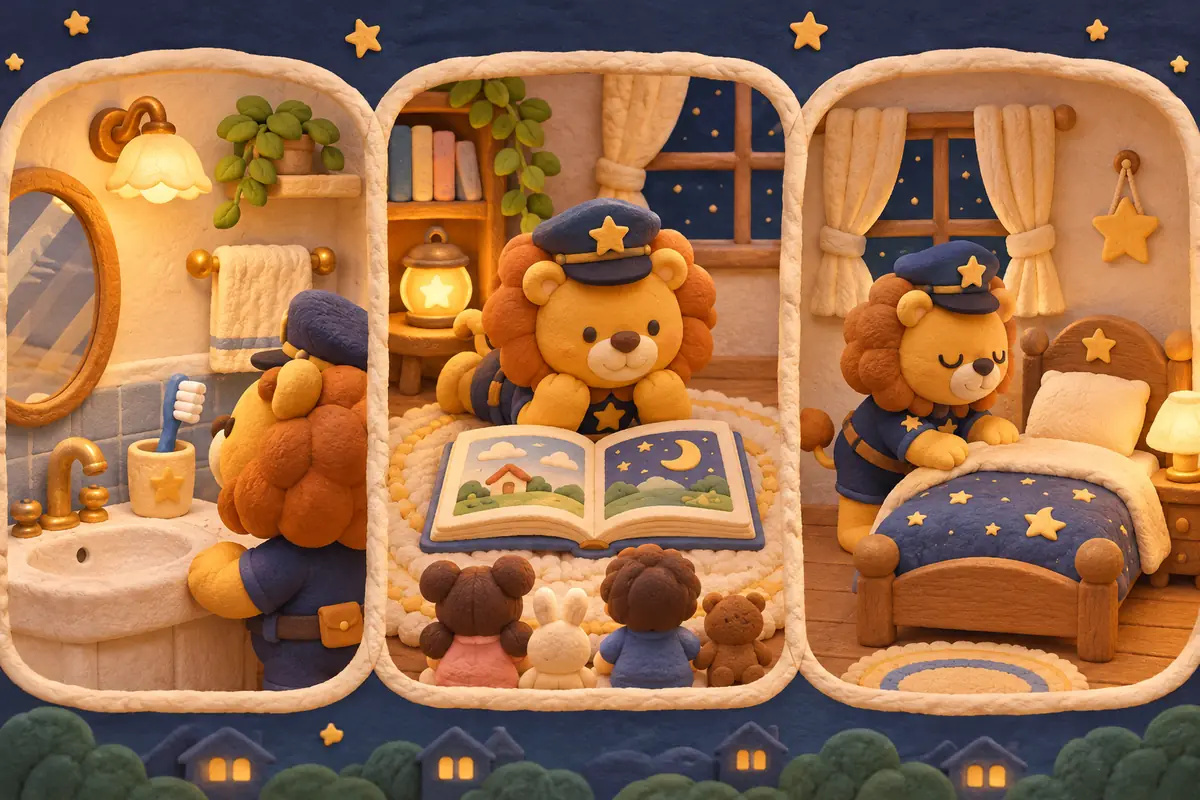
The bedtime routine the AAP suggests has just three steps, called Brush, Book, Bed:
- Brush: Little ones need a grown-up to help brush. After brushing, no more food.
- Book: After brushing and before bed, find a comfy spot and read a book or two together. The AAP says even 15 minutes a day helps.
- Bed: Go to bed at about the same time every day.
The key is that it's the same every day. When kids know what comes next, they bargain less. The AAP also suggests waking up at the same time on weekends and weekdays. A steady schedule makes it easier to fall asleep at night.
3. List the bedtime steps, one at a time
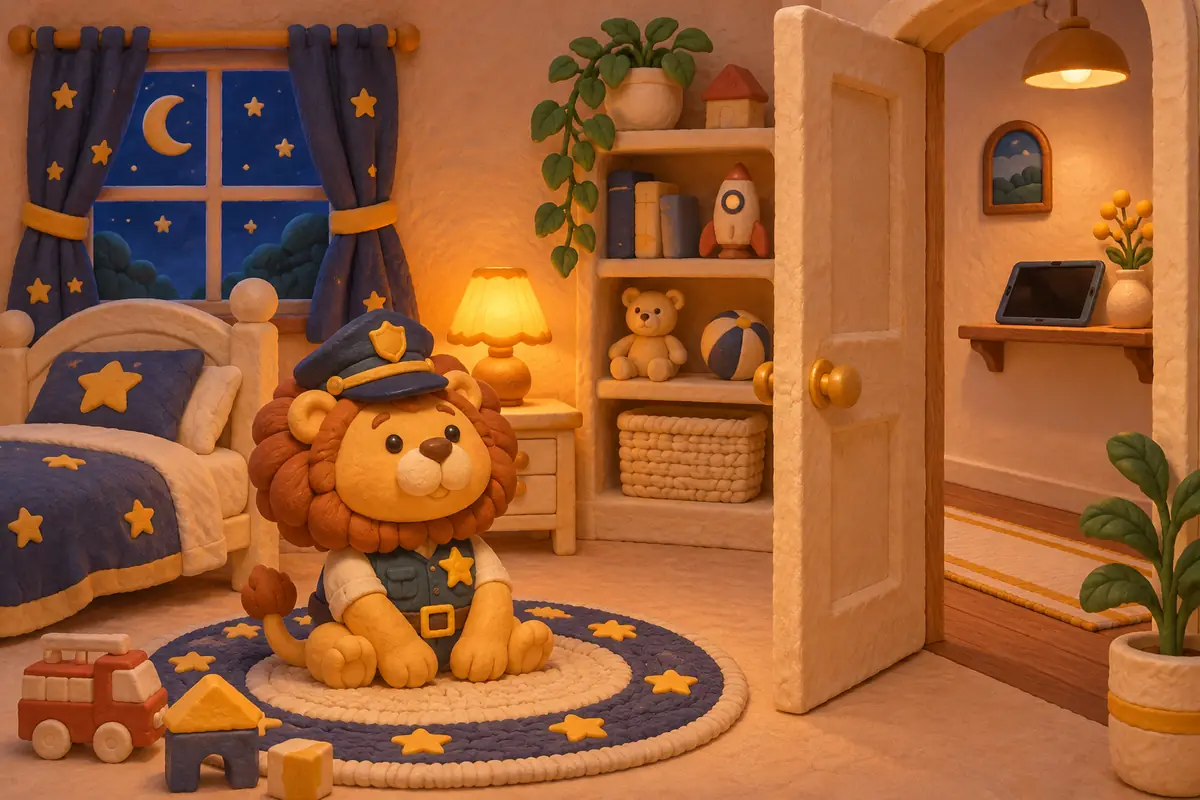
"Get ready for bed" is too vague for a child. Break it into a few small things they can see, such as using the toilet, brushing teeth, putting on pajamas, picking a book, and lying down. Draw them on a sheet of paper, tape it to the bedroom door, and tick off each step as it's done.
You don't need many steps. 3 to 5 is enough, and the list stays the same every day. When the last step is done, bedtime tasks are over. Don't add more on the spot. I wrote about this idea of breaking things into countable steps in What to do when kids won't tidy up or brush their teeth, and it works at bedtime too.
4. Screens off an hour early, lights down low
The AAP's advice is specific. To protect sleep, turn off all screens at least 60 minutes before bed. TVs, computers, tablets, and phones should not be in the child's bedroom, especially at night.
- Make "screens off" the first item on the list, set for one hour before bed.
- Dim the lights before bed and keep the room at a comfortable temperature.
- Keep toys off the child's bed. The bed is for sleeping.
Turning off screens is where fights start most easily. Agree on the time ahead, and turn them off when the time comes. That goes better than calling a stop in the moment. You can also set screen rules for the whole family and follow them yourself.
5. Start early, before the eye rubbing
The AAP warns not to wait until your child rubs their eyes or yawns before heading to bed. By then it may already be too late. Moving bedtime 15 to 20 minutes earlier can make a clear difference.
In practice, move the start time of the list earlier. You don't need to shorten the routine itself. When the routine has enough time, you don't have to keep hurrying your child, and they are less likely to melt down from being overtired.
6. When they stall, offer choices, not deals
"One more sip of water" and "one more story" are very common stalling lines. Here is what I've found useful:
- Offer two choices that are both fine: "Do you want to brush your teeth first, or put on pajamas first?" They pick the order, and the tasks stay the same.
- Build the usual requests into the routine: If they always want water, make "take a sip of water" one step on the list. Once it's done, nothing more gets added.
- No threats, no deals: "No cartoons tomorrow if you don't go to sleep" or "I'll give you a sticker if you sleep" may work in the short term, but soon it turns into a nightly negotiation.
If your child still often can't fall asleep with a steady routine, wakes in the night, or snores loudly, the AAP suggests talking to a pediatrician. The doctor may ask you to keep a record of your child's sleep first.
7. Let Deng the Night Watch call with Lion on the Line
I built the ideas from sections 3 and 6 into Lion on the Line. You pick a character from the animal village and an everyday task, and the character "calls" your child to ask for help. These are the ones that fit bedtime:
| Character | Task | Each time the child finishes one |
|---|---|---|
| Deng the Night Watch (anglerfish) | Getting ready for bed | The little lantern on Deng's head dims a bit |
| Deng the Night Watch (anglerfish) | Screen off | A little fish in the deep sea falls asleep |
| Nono Upside-Down (bat) | Calm down | The child breathes in and out slowly with Nono, and Nono's wings fold in a little |
- In the setup screen, pick Deng the Night Watch and “Getting ready for bed.” Set how many times the child needs to do it (1 to 5, matching the number of steps on your list). Then choose whether it rings Now, In 10 sec, or In 30 sec.
- Tap “Call.” With only one phone, the screen goes dark. Put the phone in front of your child, and it rings when the time is up. Your child taps “Answer,” and Deng says, "I heard it's bedtime. Each bedtime thing you finish dims my little lantern."
- Each time your child finishes a step, you tap once, and Deng answers with a line on the call. When everything is done, Deng says it will keep watch over the forest village tonight, tells your child to sleep well, and hangs up.
Deng's lines are quieter in tone, which suits bedtime. If your child taps “Later,” the call simply ends, and the character doesn't scold. If 60 seconds pass with no progress, Deng gives just one gentle reminder.
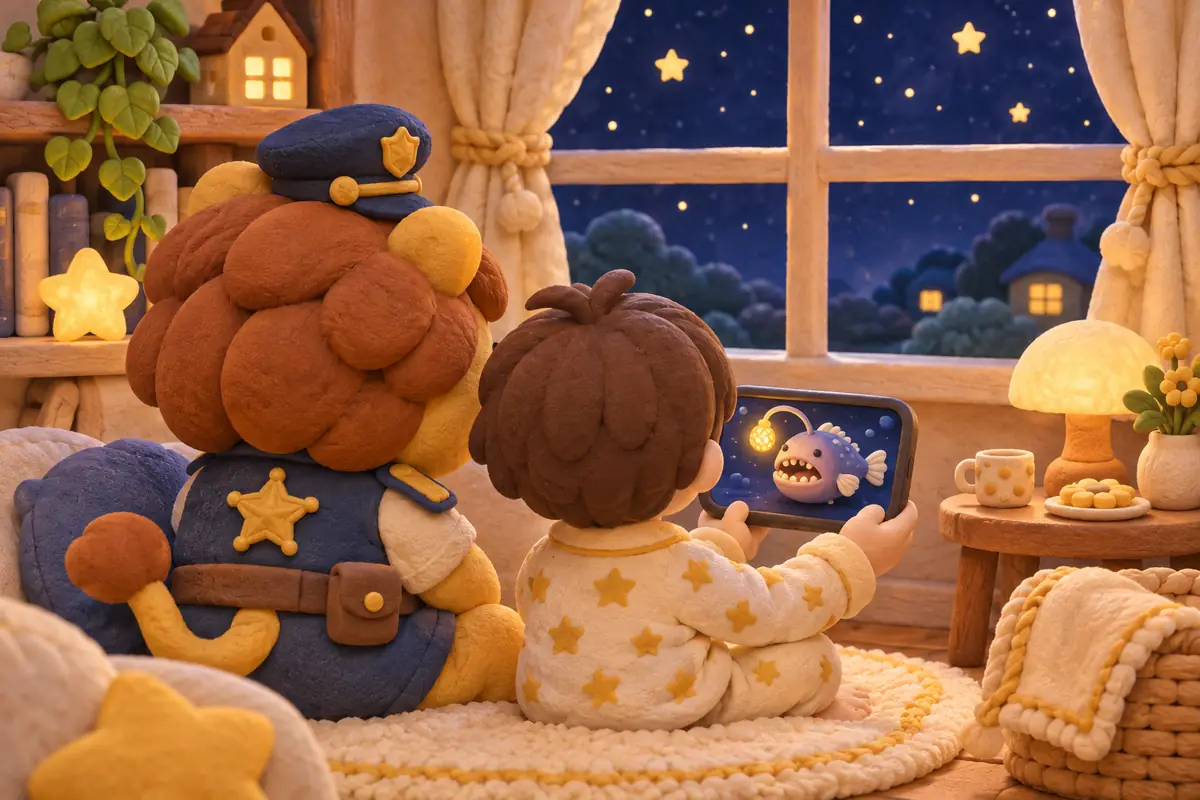
One thing to be clear about: this call is itself a screen. If you follow section 4 and turn screens off an hour before bed, you can use Deng's “Screen off” as the last screen time of the day. Brushing, reading, and bed after that need no phone. When the call ends, take the phone out of your child's room.
Sheriff Leo (Mealtime, Tidy up toys) is free to use. Deng, Nono, and the other characters are a one-time in-app purchase. After that you can use them as long as you like, with no subscription. The app uses no microphone or camera, needs no account, and requires an iPhone or iPad with iOS 17 or later.
8. FAQ
How much sleep does my child need?
The AAP supports the American Academy of Sleep Medicine's recommendations: 11 to 14 hours a day for ages 1 to 2, 10 to 13 hours for ages 3 to 5 (both include naps), and 9 to 12 hours for ages 6 to 12. Count back from the wake-up time to find when your child should be asleep.
How long before bed should screens go off?
The AAP recommends turning off all screens at least 60 minutes before bed. TVs, computers, tablets, and phones should also stay out of the child's bedroom.
How many steps should a bedtime routine have?
The AAP's Brush, Book, Bed has just three steps: brush, book, bed. You can add the toilet and pajamas, but the order and the number of steps should be the same every day.
Can Lion on the Line call automatically every night?
No. For every call, the parent taps “Call” in the setup screen. You can choose to have it ring now, in 10 seconds, or in 30 seconds.
Does Lion on the Line say my child's name?
No. The lines and voices are premade, and the characters call every child “little one.”